


MIL-STD-167-1A Naval Vibration: How Wire Rope Isolators Control Resonance and Reduce Transmissibility in Shipboard Electronics
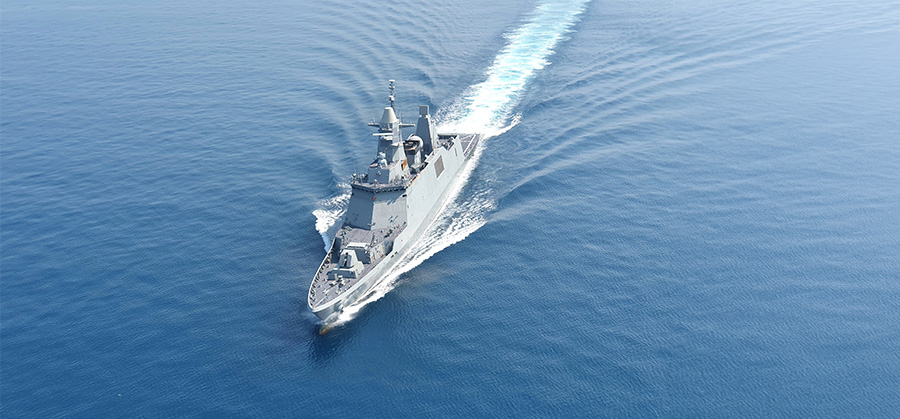
Naval electronics operate in one of the harshest vibrational environments on earth. Unlike isolated shock events, shipboard equipment endures continuous, low-frequency vibration from propulsion systems, machinery and wave action — conditions that accelerate fatigue failure and degrade performance over time. MIL-STD-167-1A establishes the framework for evaluating equipment survivability under these conditions, but passing the standard’s tests doesn’t guarantee long-term operational reliability. MIL-STD-167-1A is the current iteration of the standard, superseding earlier versions such as MIL-STD-167B and the original MIL-STD-167.
MIL-STD-167-1A distinguishes between two kinds of vibration: Type I and Type II. Type I addresses environmental vibrations transmitted to shipboard equipment from external sources such as ship engines and wave motion. Type II covers vibrations generated internally by the equipment itself — primarily by rotating machinery. The standard prescribes exploratory (sweep), endurance (dwell), and variable vibration tests exclusively for Type I, to ensure equipment can withstand vibration environments in a conventional naval vessel. In contrast, Type II procedures focus on balancing requirements for rotating components, rather than subjecting equipment to exploratory and endurance vibration tests.
Misunderstanding the distinct requirements of Type I environmental vibration testing and Type II internal vibration balancing can occur, particularly when standards change or documentation is unclear. A potential cause is resonance. When mounting strategies fail to account for how vibrational energy flows through the system as a whole, even compliant systems experience accelerated fatigue, connector degradation and unexpected in-service failures. Effective vibration isolation requires damping at resonance frequencies, not simply attenuating vibration across the frequency spectrum.
MIL-STD-167-1A Vibration Testing: Engineer Quick Reference
MIL-STD-167-1A defines distinct testing procedures that work in sequence to evaluate equipment survivability against both Type I environmental and Type II internally excited vibrations. Understanding the distinction between exploratory and endurance testing is critical for designing effective isolation systems.
| Category | What It Defines | Key Considerations |
|---|---|---|
| Type I | External Vibration Source Testing (Environmental Vibration) | Identifies frequencies and verification of performance under specified external vibration levels. Also includes mounting methods, test instrumentation, and applicability over specified frequency ranges. |
| Type II | Internal Vibration Source Testing (Internally Excited Vibration) | Focuses on balancing requirements for rotating machinery: balance quality grade, residual unbalance limits, balancing procedures (single/multi-plane), and operation at or near critical speeds. |
| Frequency Range | Shipboard excitation | Type II can fall within any range, while Type I is typically ~2-33 Hz |
| Response Prominence | Resonant amplification | Critical driver of fatigue and failure |
| Transmissibility | Output vs input vibration | Key isolator performance metric |
| Damping | Energy dissipation | Controls amplification at resonance |
How Shipboard Vibration Propagates Through Naval Systems
Vibration originates from propulsion machinery, diesel generators and hydrodynamic forces acting on the hull. These sources generate multi-frequency excitation that travels through the ship’s structure as structure-borne vibration. By the time this energy reaches mounted equipment, the ship’s deck and structural framework will have subjected it to a range of physical effects, including attenuation, resonance amplification, damping, and constructive and destructive interference. These interactions transform the original vibration sources into a complex and unpredictable input spectrum, which can differ significantly from its original form.

Transmitted vibration subjects electronics to continuous cyclic stress. Sensitive components experience fatigue in solder joints, loosening of connectors and structural damage to racks and enclosures. The challenge for shipboard resonance control is not eliminating vibration (an impossible task in a naval vessel environment) but managing how that energy interacts with mounted equipment.
Frequency content typically spans the 4-33 Hz range defined in MIL-STD-167-1A, with energy concentrated at specific frequencies corresponding to propeller blade rate, engine firing frequency and structural modes of the ship itself. Equipment mounted without proper isolation receives this input directly, and any resonance within the mounting system can amplify the response.
How MIL-STD-167-1A Is Structured
MIL-STD-167-1A organizes shipboard vibration isolation testing into a two-part process. For most evaluations of Type I environmental vibrations, equipment is subjected to a frequency sweep and variable frequency testing to identify resonances (response prominences) across the applicable range. If a resonance is found, the equipment undergoes an endurance (dwell) test at that frequency to confirm it can endure sustained vibration without loss of function.
Exploratory vibration test results inform endurance conditions. If exploratory testing identifies a response prominence at 12 Hz, endurance testing will subject the equipment to sustained vibration at that exact frequency in most nominal situations. However, due to the type of exploratory testing, it may be a rounded value to a whole integer in some cases. Rather than simulating average operating conditions, the test targets the system at its worst-case resonance behavior.
Viewing MIL-STD-167-1A vibration testing simply in terms of pass/fail results may overlook the nuance in how vibration interacts with equipment over time and the broader design implications involved. The standard is designed to expose vulnerabilities, not validate average performance.
In comparison, procedures for Type II internally excited vibrations do not involve a vibration endurance test. Instead, they require that rotating machinery be properly balanced to specified limits to minimize internally generated vibrations.
Testing Procedures: Identifying vs. Enduring Resonance
During testing for Type I environmental vibrations, equipment is subjected to vibration across the naval frequency range, either by a continuous frequency sweep or by stepping through whole integer frequency intervals. Accelerometers measure response at multiple locations. When output acceleration significantly exceeds the input (typically by a factor of two or more), the system is demonstrating a potential resonance. These frequencies are documented as response prominences.
Endurance testing, typically performed for Type I environmental vibrations, subjects the system to sustained vibration at each identified resonance frequency for a specified duration. Failures typically occur during this phase. A mounting system that survives a brief sweep through resonance during the exploratory vibration test may not survive two hours of continuous excitation at that same frequency during endurance vibration.
Engineers face a critical challenge: not avoiding resonance (every system has natural frequencies), but ensuring that when resonance occurs, the amplification factor remains low enough that the system survives prolonged exposure. Damping becomes critical to achieving this goal.
The Real Engineering Challenge: Controlling Resonance Amplification

All mechanical systems exhibit resonance to some degree. The question is not whether resonance will occur, but how severe the amplification will be and at what frequencies. Transmissibility (the ratio of output vibration to input vibration) reaches its peak at resonance. An undamped system can amplify input vibration by a factor of 10 or more. A well-damped system may amplify by only a factor of two to three.
The amplification factor determines stress cycles, which drive fatigue accumulation. A system experiencing 10x amplification at resonance will accumulate fatigue damage far more rapidly than a system experiencing 3x amplification, even if both systems pass exploratory testing. Rather than eliminating resonance, designers must make it as least severe as possible.
A naval vibration isolator reduces the transmission of vibrational energy to mounted equipment through damping and by altering the system’s resonance frequencies. Damping converts some vibrational energy to heat, reducing transmissibility at resonance, while changes in the system stiffness and mass due to the isolator can shift the resonator out of problematic frequency ranges. However, because these changes can introduce new resonant modes or allow certain frequencies to pass, vibration isolation must be considered from a system-wide perspective, ensuring that unintended frequency interactions do not compromise equipment performance.
How Wire Rope Isolators Perform Under MIL-STD-167-1A Conditions

Wire rope isolators provide inherent damping through friction between the strands of the helical steel cable. Friction damping is effective across a wide range of amplitudes and frequencies, making wire rope isolators particularly well-suited for naval applications where input conditions vary continuously.
Typical damping constants for wire rope isolators range from 15%-25% of critical damping, compared to 5%-10% for many elastomeric mounts. Higher damping translates directly to lower amplification at resonance. Where an elastomeric mount might exhibit transmissibility of 5x-10x at resonance, wire rope isolator transmissibility typically remains in the 2.5x-3x range.
During endurance testing, this difference is decisive. Lower amplification means lower cyclic stress on solder joints, connectors and structural members. Equipment mounted on high-damping isolators experiences less fatigue accumulation per cycle, which extends time to failure and improves long-term survivability in service. For detailed performance data, refer to isolator data sheets that provide transmissibility curves and damping characteristics.
Transmissibility Across the Naval Frequency Range

An effective isolator has two jobs. First, it must control amplification at resonance. Second, it must provide attenuation above the natural frequency of the isolated system. Attenuation is the reduction in transmitted vibration when the excitation frequency exceeds the system’s natural frequency.
For 2–33 Hz vibration isolation, wire rope isolators deliver strong attenuation in the upper portion of this range. As excitation frequency increases beyond twice the natural frequency, transmissibility drops below unity, meaning the isolator transmits less vibration than it receives. Attenuation increases with frequency, providing greater protection as input frequency rises.
Dual performance (controlled amplification at resonance and effective attenuation above resonance) makes wire rope isolators effective for shipboard applications. Engineers can reference isolator data sheets to evaluate transmissibility across the full frequency spectrum and select isolators that match their application requirements.
How Wire Rope Isolators Protect Naval Electronics
Wire rope isolators commonly consist of corrosion-resistant stainless steel, such as type 316, woven in a helical pattern and retained between high-strength bars. Cable construction provides the spring element, while friction between cable strands provides damping. All-metal construction offers advantages for naval environments beyond vibration performance alone, though MIL-STD-167-1A does not specify a particular material requirement for isolators.

Corrosion resistance is critical for equipment exposed to salt spray and humidity. Stainless steel construction withstands these conditions without degradation. Temperature tolerance is another consideration. Wire rope isolators function across a temperature range from -300°F to 500°F, far exceeding the operating range of elastomeric materials.
Multi-axis isolation capability is inherent in the design. Unlike mounts that isolate effectively in only one direction, these isolators provide significant isolation across multiple axes, which is crucial for naval applications where vibration can originate from various directions, mounting methods and location, and other sources. However, the level of isolation in each direction depends on the isolator’s specific design and installation, so performance may be greater in some axes than others. Multi-axis performance is essential for naval electronics vibration mounts, where excitation arrives from multiple directions simultaneously.
Designing an Effective Vibration Isolation System
Effective isolation requires more than selecting a part number from a catalog. Design begins with understanding the dynamic behavior of the system and continues through careful selection of isolator stiffness, placement and configuration.
Determining Natural Frequency

Natural frequency of an isolated system depends on the mass of the equipment and the stiffness of the isolators. This relationship is fundamental. Natural frequency increases with stiffness and decreases with mass. Position the natural frequency away from dominant excitation frequencies in the shipboard environment if possible.
A common design rule maintains a natural frequency at least a factor of two away from any dominant operational or environmental frequency. This separation helps prevent not only direct resonance but also the risk of harmonic or subharmonic excitation, where the system can be affected by frequencies that are multiples or fractions of the main excitation frequency.
For example, if a propeller blade rate generates strong excitation at 8 Hz, the isolated system should have a natural frequency below 4 Hz or above 16 Hz to avoid resonance overlap.
Adjusting natural frequency requires changing stiffness or mass. Increasing stiffness raises natural frequency. Accomplish this by selecting stiffer isolators, adding bracing to the mounting structure or reducing the span between mounting points. Decreasing stiffness lowers natural frequency, which may be desirable when excitation is concentrated at higher frequencies.
Managing Resonance Placement
Even with careful frequency selection, it is important to position resonant frequencies where they cause minimal harm. In practice, not all operational frequencies may be known or predictable during design. As a result, it is necessary to account for a wide range of potential excitation sources and to design resilient systems that can tolerate or mitigate resonances as they arise — whether from known or unforeseen conditions.
For systems where passive isolation cannot adequately separate resonance from excitation, active vibration control may be necessary. Active systems use sensors and actuators to apply counteracting forces in real time, providing additional control at specific frequencies where passive methods are insufficient.
Displacement Requirements
Isolators must have sufficient travel capacity to accommodate the maximum expected displacement without bottoming out. Space constraints are the most common challenge in naval applications, where equipment bays and mounting locations often have limited clearance. In high-vibration environments, displacement can exceed several inches at resonance. Wire rope isolators offer stroke efficiency ratios up to 0.75, meaning an isolator with a height of four inches can provide up to three inches of travel.
For applications requiring precise displacement control, configure active isolation systems in series with passive isolators. The active element directly controls displacement while the passive element provides high-frequency attenuation, combining the strengths of both approaches.
Multi-Axis Isolation
Real-world vibration arrives from multiple directions. Deck vibration propagates vertically, longitudinally and laterally, and equipment must be protected in all axes and combinations of axes. A comprehensive isolation system addresses all six degrees of freedom: three translational and three rotational.
Wire rope isolators deliver inherent multi-axis damping due to their cable construction and mounting geometry. Combining passive isolators with active components allows for high-frequency attenuation from the passive elements and low-frequency resonance control from the active system, providing effective isolation across the full spectrum.
Example: Shipboard Electronics Under Vibration
Consider a naval electronics rack mounted in a compact equipment bay with limited overhead clearance—a common scenario in shipboard applications. Without isolation, the rack receives deck vibration input directly. If the rack’s structural natural frequency coincides with propeller blade rate at 10 Hz, the rack experiences amplified response at that frequency. Over time, sustained resonance causes solder joint fatigue, connector loosening and eventual failure of sensitive components.
Installing wire rope isolators between the deck and rack changes the system dynamics. The isolators introduce damping and shift the natural frequency away from the 10 Hz excitation. Transmissibility at the new resonance frequency drops from 8x to 3x due to the isolator’s damping. Vibration at frequencies above resonance is attenuated, further reducing stress on the electronics.
Controlled amplification, reduced cyclic stress and extended operational life result from this approach. Naval electronic racks, control consoles and weapons system electronics throughout the fleet use this mounting strategy.
Common Mistakes in MIL-STD-167-1A Vibration Design

Don’t treat MIL-STD-167-1A as a checkbox exercise. Equipment that passes qualification can still fail in service. Use the standard as a design tool. Type I data should inform your isolation strategy by identifying where resonance occurs and how severe the amplification is.
Does your design account for resonance behavior? Every system has resonances. Pretending they don’t exist won’t prevent failure. Control amplification through damping and position natural frequencies away from dominant excitation.
Transmissibility varies with frequency, and performance at one frequency doesn’t predict performance at another. Evaluate isolator performance across the full frequency range, not just at a single test point. Oversimplifying this relationship leads to designs that fail under real-world conditions.
Static load capacity is necessary but not sufficient. Dynamic response (natural frequency, damping and transmissibility) determines whether the system survives long-term vibration exposure. Selecting mounts without dynamic analysis is a recipe for failure.
Designing for Vibration Endurance in Naval Systems
Long-term survivability requires controlling resonance and maintaining low amplification throughout the equipment’s operational life. High-damping isolators reduce peak stress at resonance, which slows fatigue accumulation and extends time to failure.
Proper isolator selection is not about eliminating vibration but about managing how vibration energy interacts with mounted equipment. Wire rope isolators deliver the damping necessary to keep amplification low and the structural integrity to maintain performance in harsh naval environments.
Survivability isn’t about passing a test. It’s about controlling resonance, reducing transmissibility and protecting equipment through years of continuous exposure to shipboard vibration. Wire rope isolators are the most effective tool for that job.
FAQ: MIL-STD-167-1A Vibration Testing
The following FAQs address critical aspects of MIL-STD-167-1A vibration testing. This guidance provides technical clarification for common inquiries related to compliance and survivability.
What Is the Difference Between Exploratory and Endurance Testing?

In the context of MIL-STD-167-1A, particularly for evaluating Type I environmental vibrations, an exploratory frequency sweep and variable frequency testing identify resonant frequencies in the system. Then, endurance testing subjects the system to sustained vibration at the resonances identified during exploratory testing. The first test finds weaknesses, and the second test confirms the system can survive prolonged exposure at those weaknesses.
Why Is Resonance Important in Shipboard Vibration?
Resonance amplifies input vibration, often by factors of five to 10 or more in undamped systems. Amplification drives cyclic stress, which accelerates fatigue damage and leads to premature failure. Controlling amplification through damping is the key to long-term survivability.
How Do Wire Rope Isolators Reduce Vibration Damage?
These isolators offer high damping through friction between cable strands. Damping reduces amplification at resonance, typically to 2.5x-3x compared to 5x-10x for lower-damped mounts. Lower amplification means lower stress and slower fatigue accumulation.

Contact IDC for MIL-STD-167-1A Vibration Isolation Solutions
Designing vibration isolation systems for naval electronics requires more than selecting components from a catalog. IDC provides expert engineering support to help you size wire rope isolators for MIL-STD-167-1A compliance and long-term survivability. Our team understands the relationship between damping, transmissibility and resonance control in shipboard environments.
Whether you’re addressing endurance requirements or optimizing isolation for multi-axis vibration, we can assist you in developing a mounting strategy that reduces amplification and protects your equipment throughout its operational life. Contact us to discuss your application, or request a quote for wire rope isolators engineered to perform under the demanding conditions defined by MIL-STD-167-1A.
Speak with a Sales Representative
Our representatives have a wealth of knowledge on all our products – let them steer you in the right direction.
Learn More
